Wednesday, September 29, 2021

Kids 'R' Kids talks about self-regulation skills among kids

 Self-regulation skills for preschoolers


According to many studies, self-regulation is necessary for the social-emotional and academic success and well-being of a child. It is one of the most important life skills that parents and teachers must work together to build from an early age. Kids ‘R’ Kids Valrico, an educational preschool, shares below certain tips to help develop self-regulation skills in early childhood. 
What is self-regulation?

Self regulation is a person’s ability to manage emotions and behavior as per the demands of the situation. This set of skills enables children to inhibit their emotional or behavioral responses and direct their behavior towards a goal. For instance, controlling the urge to hit another child because their demands are not being met is a skill that needs to be slowly built. The ability to resist highly emotional reactions to upsetting stimuli, to calm oneself down when upset, to adjust to a change in expectations, and to handle frustration without an outburst is an important ingredient to living an emotionally stable and productive life. This skill helps to direct one’s behavior towards a fruitful end despite the unpredictability of the world and one’s feelings.


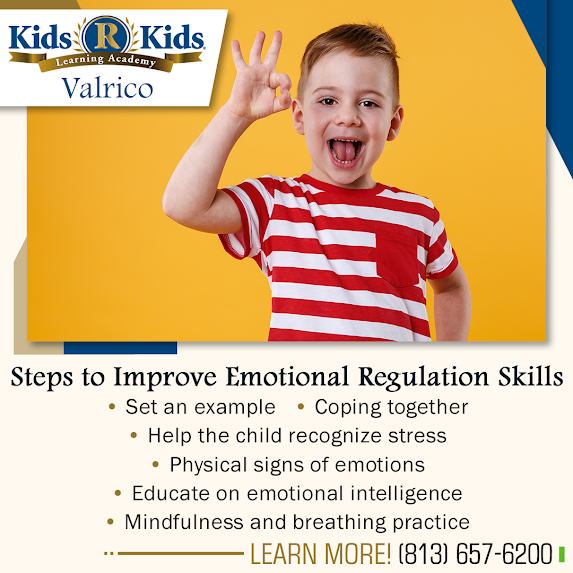
Steps to improved emotional regulation skills

  1. Set an example 

Children imitate what their caregivers do. So it is important to be a role model when it comes to emotional regulation. The way parents and caregivers handle daily stress is constantly being observed by the little ones. These are life skills and strategies for coping with problems that children start learning at a very young age.


  1. Help the child recognize stress

Certain situations, environments, and sensations can trigger children and upset them. The reasons could be lack of sleep, hunger, loud noises, crowds, too much screen time, and disruption of routine. Recognizing the reasons that cause excessive stress to a child can help create awareness and empower the child as well as the caregiver by preparing them. Challenging behaviors such as whining, defiance, or emotional meltdowns can be prevented or mitigated if there is clarity on the triggers. This discovery of emotional triggers is also a common anger management activity for kids. 


  1. Physical signs of emotions 

Emotional triggers can make children feel “out of control” and cause anxiety in its wake. But teaching a child to recognize their emotions, especially in the way they show up in their body helps to create self-awareness. The way emotions manifest in the body such as sweaty palms, racing heartbeat, and restlessness can be identified and checked before they take over completely. 

  1. Educate on emotional intelligence

Besides identifying the physical signs of certain emotional triggers, it is important to name the emotion. Emotional intelligence is defined as the ability to recognize, understand, and manage one’s emotions and the emotions of others.

An emotional vocabulary goes a long way in helping a child identify emotions and working through them. Visual tools can help children through early elementary ages to learn to manage their emotions.


  1. Coping together

Once an emotion and its triggers are identified, children need help with discovering healthy and productive outlets for these intense emotions. Every child’s unique nervous and sensory system means that the self-regulation trick would also be unique and will evolve. This requires some trial and error but it is worth exerting this effort. Some children may require physical touch when they are upset while some may resist it. Some children calm down in their own particular space while others need their caregiver’s company. 

Generally, young children are physiologically helpless to calm down by themselves. Another effective approach to expanding a child’s emotional regulation skills is to practice co-regulation. This is active participation in helping a child deal with anger and other intense emotions by being present with them. 


  1. Mindfulness and breathing practice

There is an undeniable connection between the body and mind. Besides maintaining consistent routines, mealtimes, and bedtimes as well as building healthy habits, caregivers can teach children the importance of breath. Research proves that deep, mindful breathing can calm the nervous system. Research on mindfulness shows that it strengthens the prefrontal cortex and one’s ability to regulate emotions and behaviors.

Simple mindfulness practices can help maintain a low baseline of emotional arousal in children. This calming strategy can also be used anywhere, anytime to help them manage their emotions and maintain their calm. 

Why Kids ‘R’ kids?

The philosophy of “Hug First, Then Teach”, defines every aspect of what Kids ‘R’ Kids, Valrico stands for. Unlike many daycare centers or childcare providers, its methodology is a whole-child approach. It constantly strives to strengthen and encourage every child’s emotional, intellectual, social, and physical well-being through the expertise of its childcare providers and a unique partnership with parents.
Kids ‘R’ Kids International is accredited by AdvancED®, the world’s largest education community, and the Southern Association of Colleges and Schools Council on Accreditation and School Improvement (SACS/CASI). SACS/CASI is an accreditation division of AdvancED®. This accreditation ensures that the high accreditation standards are met and exceeded.  
KRK-V-0921-(2).pngKRK-V-0921-(1).png

Contact Information:

Kids 'R' Kids Learning Academy of Valrico

4321 Lynx Paw Trail
Valrico, FL 33596
United States

Ben Fernandes
(813) 657-6200
http://www.krkvalrico.com/

Thursday, July 1, 2021

Kids ‘R’ Kids, Valrico Shares The Benefits of Play for Preschoolers


The importance of play for preschoolers 

Research has proven that the most important period of human development is from birth to eight years old. Learning during these years happens at a pace that will never be matched. This is when cognitive skills, emotional well-being, social competence, and sound physical and mental health develops, laying a strong foundation for a successful adult. Kids ‘R’ Kids, Valrico, an educational preschool, shares the importance of structured and unstructured play for preschoolers that helps them prepare for formal school.

preschool valrico

Structured and unstructured play

Structured play is also called goal-oriented or guided play. It is an activity that comes with structured instructions and has a specific learning objective for a preschooler. It is composed of planned activities that are supervised by adults - parents and teachers. 

However, organizing every detail for children can hamper the development process. Children need to be allowed to use their imagination and individual creativity to learn and grow. 

Unstructured play or free play is focused on creative, improvised forms of activity. It may involve both outdoor and indoor activities wherein the child can take decisions and solve problems independently. Activities may range from pretend play to building blocks and exploring a garden. 

One major drawback of unstructured play is that the child cannot be left alone even for a moment and should be under the parent’s supervision at all times, especially the younger preschool kids. They must be educated about how to keep themselves safe and to recognize the possible dangers around them.

Benefits of play on a child’s development

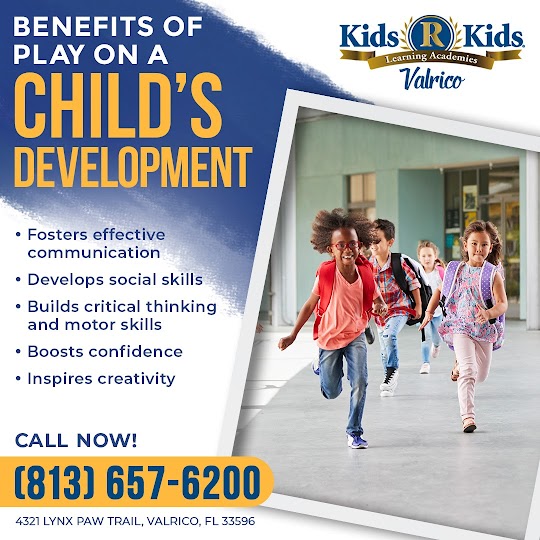
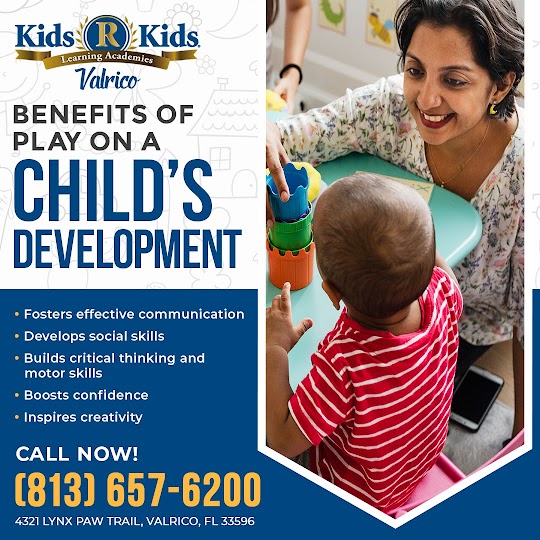
  1. Fosters effective communication

Play enables a child to develop important speech, language as well as listening skills. During play led by preschool teachers or parents, children need to listen to instructions and follow directions to complete a task. This ability to listen and understand helps build communication skills. During unstructured play and without any company children may narrate their pretend play story and practice the words and expressions learned. An unstructured group play will require the children to communicate, discuss, negotiate, and compromise. All this play leads to the development of effective communication skills and a teamwork spirit. 

  1. Develops social skills

Unstructured as well as structured play drives children towards the achievement of a shared goal. The collaboration makes children perceptive of each other’s needs, builds assertiveness, teaches negotiation skills, develops cooperation skills, and reinforces the importance of sharing. Ultimately, this group play fosters social skills and children learn to make friends. Through play, children learn to work through their emotions and learn to recognize non-verbal cues, which are important components of language development and social skills. 

  1. Builds critical thinking and motor skills

Critical thinking is the ability to think in an organized and rational manner to understand connections between ideas and/or facts. This skill involves the part of the front part of the brain that manages attention, memory, control, and flexibility. Children are constantly making these connections in their world and expanding their knowledge. For instance, they learn numeracy and literacy skills while playing with various toys and books, or while playing with shapes, or counting the pages in a book. 

Physical play is crucial for the development of important motor skills and emotion regulation. Large motor skills like running, throwing, and pedaling; fine motor skills such as writing, coloring, and buttoning; balancing skills like skipping; strength-building by climbing monkey bars; and coordination through sports are some of the numerous skills that emerge from play. Eventually, children become completely independent as their motor and other body skills develop. 

  1. Boosts confidence

Most play requires creativity, but imaginative play, in particular, is great for building confidence. It allows children to practice what they see in real life and work through real-world problems. Play is a safe place to practice decision-making and build confidence. Structured play enables children to participate in risky play and test what they are capable of. This is a test of their limits as they work towards their goals in a safe space. As they succeed in achieving their goals in a safe space, their confidence develops and allows them to step out of their comfort zone to learn more.

  1. Inspires creativity

Creativity is the final sum of critical thinking and skill development. Pretend play is one of the foundations in children’s world as it allows them to explore and analyze various scenarios, reactions, and conclusions. It exposes them to cause and effect. As per studies, pretend play leads to more sophisticated levels of interaction and higher cognitive ability. 

In conclusion, children need a mix of both structured and unstructured play during their developing years. Structured play provides rules, discipline, and continuity, while free play balances it out with freedom and imagination. Kids ‘R’ Kids, Valrico provides the ideal environment for preschoolers to learn through play and grow into creative, confident, and empathetic individuals.

preschool valrico

Why Kids ‘R’ kids?

The philosophy of “Hug First, Then Teach”, defines every aspect of what Kids ‘R’ Kids, Valrico stands for. Unlike many daycare centers or childcare providers, its methodology is a whole-child approach. It constantly strives to strengthen and encourage every child’s emotional, intellectual, social, and physical well-being through the expertise of its childcare providers and a unique partnership with parents.

Kids ‘R’ Kids International is accredited by AdvancED®, the world’s largest education community, and the Southern Association of Colleges and Schools Council on Accreditation and School Improvement (SACS/CASI). SACS/CASI is an accreditation division of AdvancED®. This accreditation ensures that the high accreditation standards are met and exceeded.  

Call today at (813) 657-6200 to learn more about Kids 'R' Kids preschool (Kindergarten to Grade 5) or to schedule a visit. 

Thursday, December 31, 2020

Top Benefits of Pre-K after school programs

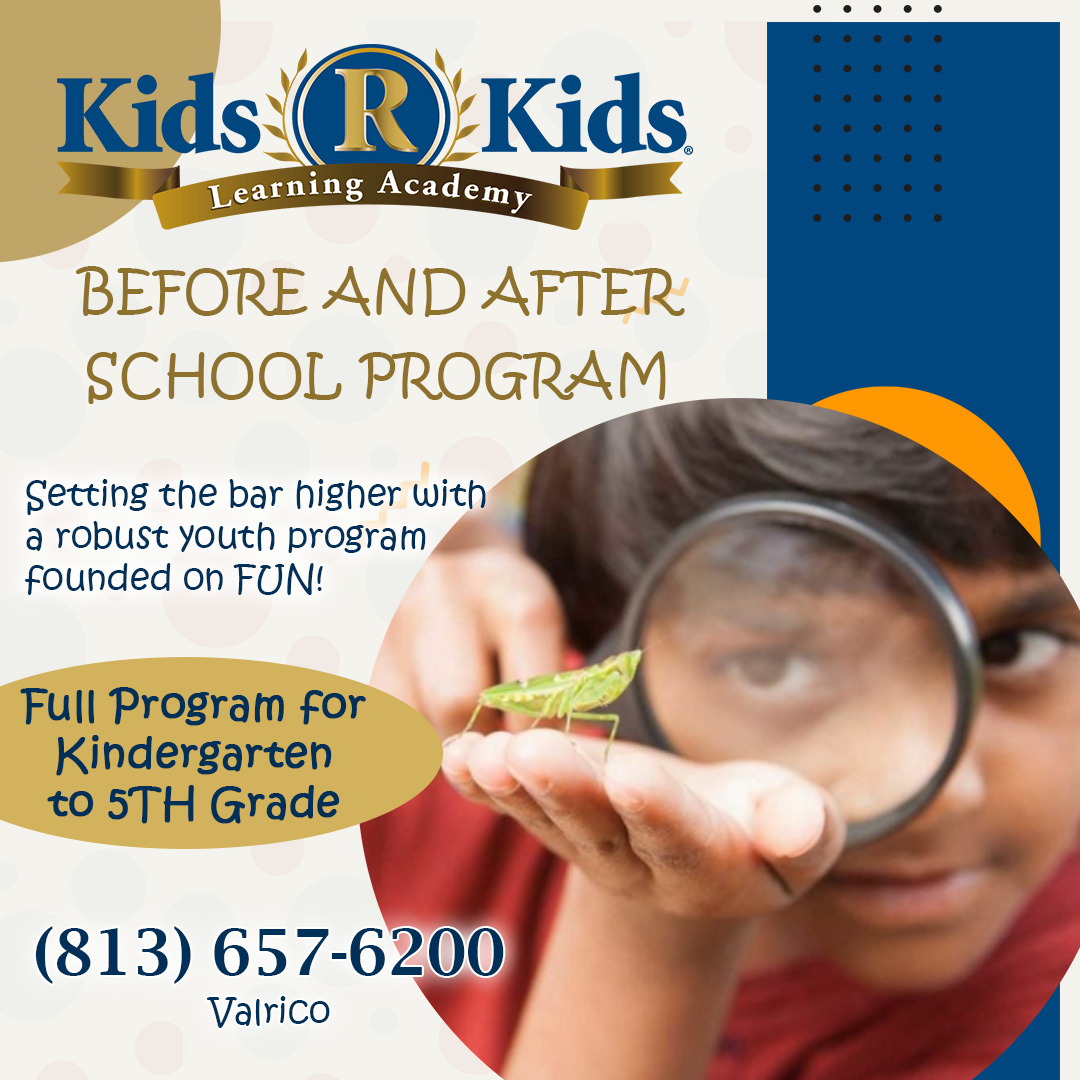
In the United States, 1 in 5 children is unsupervised from 3 p.m. to 6 p.m. A quality after school program can turn those hours into a constructive learning opportunity. According to the Afterschool Alliance, a nonprofit organization, 94% of parents report that after school programs help their kids get excited about learning, which leads to improved school performance.  

Before and after school programs are especially beneficial in strengthening the social, intellectual, emotional, and physical skills of Pre-K-age students. Florida recognizes the benefits of VPK programs (voluntary Pre-Kindergarten) by providing them to 4- and 5-year-olds at no cost, regardless of family income. When evaluating VPK programs, a family should choose a respected preschool like Kids ‘R’ Kids Learning Academy in Valrico, Florida, which offers much more than daycare programs.

Top Benefits of Before and After School Programs

Children who attend Pre-K programs are more likely to arrive at kindergarten with the skills needed for long-term academic and social achievement. Studies show that after-school programs support everything from increasing a child’s future earning potential to reducing delinquency.  Pre-K schools like Kids ‘R’ Kids Learning Academy put young students on the path to success through an evidence-based curriculum that incorporates Pre-K games with Pre-K activities.

The top three benefits of Pre-K programs include:

1. Helps prepare children for kindergarten and later academic success

A child’s brain grows exponentially in the years before kindergarten. A good Pre-K program relies on a Pre-K lesson plan that focuses on essential skills through hands-on learning. A program might combine a Pre-K sight words lesson with a game or art activity to engage a young child fully. Research shows that children who attended high-quality Pre-K programs are:

  • More likely to score higher in math and reading tests
  • More likely to graduate from high school
  • More likely to find employment at well-paying jobs after high school
  • Less likely to be arrested or struggle with substance abuse 

2. Supports emotional and social development

A child’s emotional and social health is essential for development and learning. Research shows that children with good mental health are more motivated to learn, make stronger friendships, and achieve higher academic performance as they age. A curriculum-based Pre-K program supports social and emotional growth through teaching children to:

  • Take turns and share
  • Show empathy to classmates
  • Regulate strong emotions
  • Improve self-confidence

3. Encourages physical development

Physical development also is key to a child’s learning ability. Pre-K programs support the development of fine motor skills that help children write, draw, and type. Learning through play supports whole-body movement to improve coordination and balance. Also, regular exercise through a Pre-K program can:

  • Strengthen the brain center that regulates memory
  • Improve a child’s test-taking performance
  • Boost reading, math, and spelling scores
  • Help develop healthy physical and nutritional habits

Looking for a Pre-K Program in Valrico, FL?

Hillsborough County residents who search for “daycares near me” should make sure to select a Pre-K program that focuses on encouraging academic, social, and physical growth through curriculum-based activities and games. Kids ‘R’ Kids Learning Academy, located at 4321 Lynx Paw Trail, Valrico, FL 33596, has years of experience, giving parents confidence that the program will prepare their children for kindergarten and future success.

Kids ‘R’ Kids Learning Academy offers a safe and secure environment that provides:

  • Online video monitoring of classrooms
  • Innovative and fun accredited programs
  • Nutritious meals and snacks

Interested parents should call Kids ‘R’ Kids Learning Academy today at 813-657-6200 or contact the academy online to plan a visit.

Wednesday, August 15, 2018

When Your Child Goes to Daycare: An Essential Packing List

When Your Child Goes to Daycare: An Essential Packing List

When your toddler is on his/her way to daycare, you’re probably worried whether s/he already has all the essentials. You wouldn’t want to miss out on something important!

Underwear, Diapers, and Wipes

If your toddler still uses diapers, include them. Expect that your toddler would need about six to eight diapers each day, so plan accordingly. Also put in some diaper rash ointment or cream.\

If your child is still in the process of potty training, put in some training pants, apart from diapers.

Accidents are usual for toddlers, so put in an extra pair of underwear for every outfit that you’ll pack.

When your child becomes older, like when they’re in preschool, wipes will be used. Give the daycare a full container in the beginning, as well as a refill pack. A portable container in the diaper bag may be used as backup if needed.

Nap Time Items Such as Blankets, Sheets, and Pacifiers

If your child still uses a pacifier, send about extra to the daycare or after school care center. This is because toddlers typically lose their pacifiers. You won’t like it if your child is searching for comfort and can’t find it!

Naps in daycare or at pre-K would usually take place on a mat or a cot. Check with your center, but some may ask you to bring a mat or maybe a blanket and a mat cover. Consider that accidents usually occur during naptime. So, send extra mat covers.

Extra Outfits, Outerwear, Bibs, and Painting Clothes

Bring in 2 to 3 extra outfits that can be placed inside your toddler’s cubby. You may see that your toddler goes through a lot of outfit changes each day. Place each outfit inside a resealable plastic bag, which can be used to bring wet or dirty clothes back home. Place extra underwear and socks too.

At daycare, send more than 2 bibs. Toddlers are starting to feed themselves at this pre-K age, which can get messy. Most bibs should be used just once and then laundered.

Many daycare centers or after school programs know that outdoor activities are included, so your child will be brought outside to play once or twice each day. Always be prepared for a shower of rain, by getting one of those raincoats traveling pack for your kids.

When your child gets a bit older, there will be art projects! This daycare activity is one of the most popular amongst kids, and unfortunately it can be one of the messiest. If your daycare center doesn’t have it, think of sending a paint smock or an overall for your child to wear so they can protect their clothes during art time.

Packed Snacks and Lunch

Some daycares ask parents to provide snacks, lunch, and drinks. If your daycare does this, ask them for a list of recommended foods and even banned foods. If allowed you may want to send your own sippy cup and plate, make sure to label it properly so that its clear and will not fade when they are washed.

If you still have more questions or concerns on what to pack for daycare, contact us at Kids ‘R’ Kids Learning Academy of Valrico. We’d love to hear from you!

The following info was first published on https://www.krkvalrico.com.


from WordPress https://kidsrkidsvalrico.wordpress.com/2018/08/15/when-your-child-goes-to-daycare-an-essential-packing-list-2/

Tuesday, March 1, 2016

Why you should continue to teach your child math outside of preschool | Kids 'R' Kids Valrico

Our preschool program at Kids 'R' Kids Valrico offers daily math education through hands-on learning and creative games. However, we need your help as caregiver to continue your child’s math education after our preschool program is over for the day. Consistency is keyin teaching your toddler anything, and it’s important that you establish a daily routine for teaching your child about math.

Wednesday, February 24, 2016

Ways to teach your baby language skills outside of daycare

This month, we are focusing on the importance of teaching your baby language skills in our parent blog. Research shows that language skills help your baby develop cognitive reasoning skills – the building blocks needed to understand the world around us and have success in future education and understanding.

Read more...